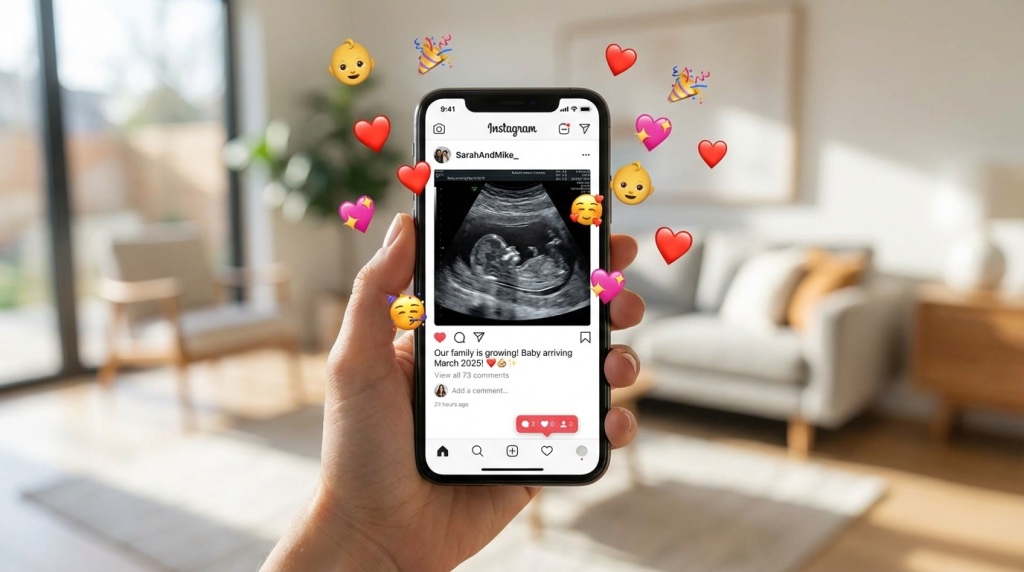
Want to double the surprise? A fake ultrasound showing twins takes any prank or announcement to the next level. I have helped create dozens of twin ultrasounds over the years, and there is an art to making them look convincing.
In this guide, I will show you everything you need to know about creating a realistic fake twin ultrasound. You will learn how real twin scans look and how to avoid the common mistakes giving fakes away instantly.

Understanding Twin Pregnancies on Ultrasound
Before you create a convincing fake twin ultrasound, understand this: not all twin pregnancies look the same. Real twin ultrasounds fall into two main categories, and each looks distinctly different.
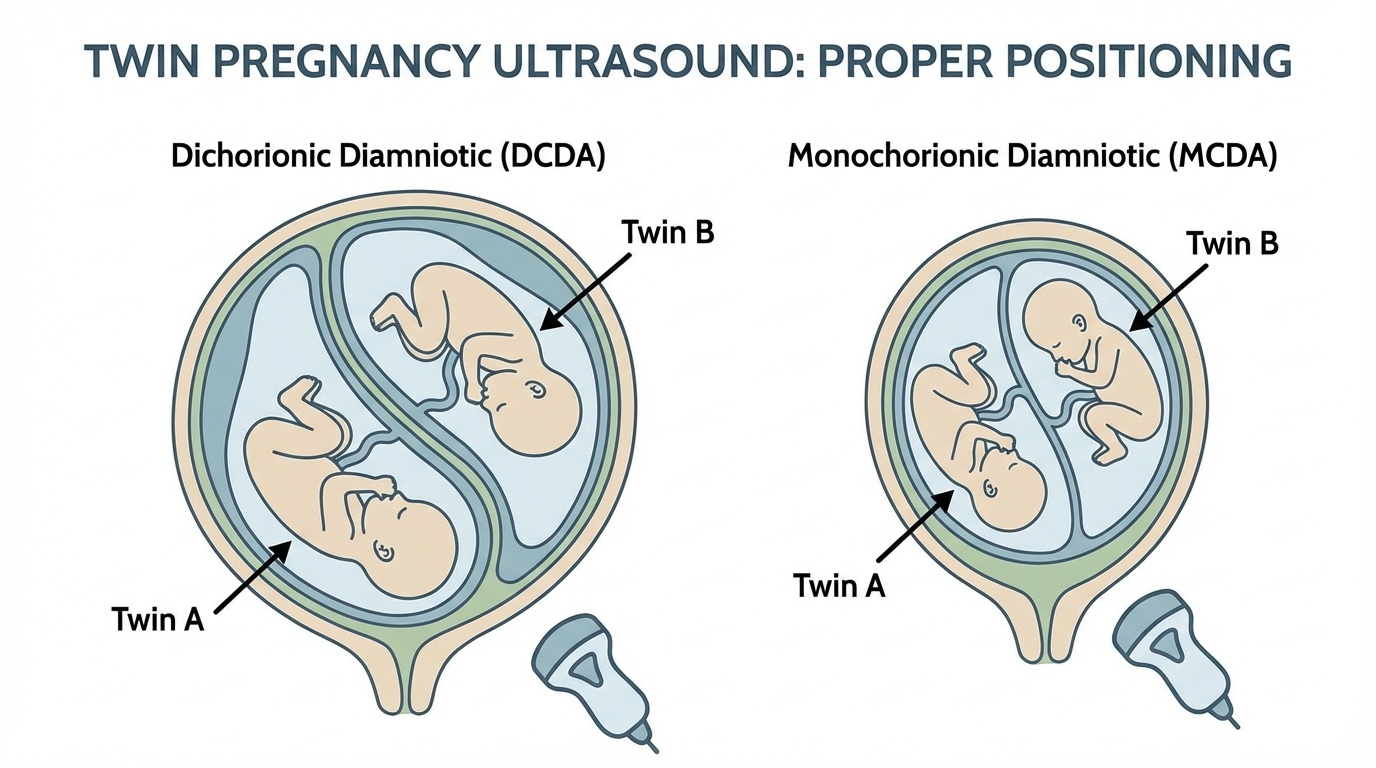
Dichorionic Twins (Two Separate Sacs)
This is the most common type, making up about 70% of twin pregnancies. Distinctive features include:
- Two distinct amniotic sacs – Each baby has its own “bubble”
- Clear membrane between them – A visible line separates the two
- Various positioning – Side-by-side or stacked arrangements
- Individual placentas – Though these fuse sometimes and look like one
Most fake twin ultrasounds should depict this type. It is most common and easiest to make look realistic.
Monochorionic Twins (Shared Sac)
These twins share a placenta and sometimes an amniotic sac. They are less common but visually different:
- Babies appear in the same sac – No thick membrane between them
- Only visible at early stages – After 12 weeks, the differences become subtle
- Riskier pregnancy type – Doctors monitor these closely
What Makes a Twin Ultrasound Look Authentic
I have seen a lot of fake twin ultrasounds looking obviously fake. The good ones get these elements right:
Proper Positioning
Real twin ultrasounds show babies in various positions depending on gestational age:
| Gestational Age | Typical Positioning | Key Visual Features |
|---|---|---|
| 6-8 weeks | Two small sacs, side by side | Tiny yolk sacs visible, embryos forming |
| 10-12 weeks | Two clear baby shapes | Head, body, limb buds visible in each sac |
| 18-22 weeks | Babies overlap or stack | Full profiles, one is larger sometimes |
| 28+ weeks | Limited view, babies crowded | Often shows parts of each baby only |
Size Consistency
This is where most fakes fail. In real twin ultrasounds:
- Babies are similar in size – Within 10-15% of each other
- Proportions match the gestational age – Both babies should look appropriately developed
- Head-to-body ratios are consistent – Early pregnancy means bigger head relative to body
Labels and Annotations
Real twin ultrasounds include specific labeling:
- “Twin A” and “Twin B” – Medical standard naming convention
- Individual measurements – CRL (crown-rump length) for each baby
- Separate heart rate readings – Often noted as “FHR” for each
- Notation of twin type – “Di/Di” for dichorionic/diamniotic is common
Choosing the Right Stage for Your Twin Ultrasound
The gestational age you choose matters a lot for twins. My recommendation:
Best: 10-14 Weeks
This is the ideal range for fake twin ultrasounds:
- Both babies are clearly visible and identifiable
- They are still small enough to fit in one image
- The separation between sacs is obvious
- It is when many people have their “dating scan” and find out about twins
Also Good: 6-8 Weeks
Early scans showing two sacs work well for “found out” reveals, though:
- The embryos are small (grain of rice size)
- Less visually impressive for announcements
- Perfect for April Fools or prank reveals
Challenging: 20+ Weeks
Later gestational ages are harder to fake convincingly:
- Babies are larger and harder to show both clearly
- More anatomical detail is expected
- Technical complexity increases significantly
Common Mistakes Exposing Fake Twin Ultrasounds
After seeing hundreds of these, I spot the bad ones immediately. Avoid these errors:
The “Copy-Paste” Error
The Problem: Both babies look exactly identical, same position, same size, mirror images of each other.
Why It Is Wrong: Real twins in the womb move independently. They are never positioned identically.
The Fix: Each baby should have a slightly different position, angle, and slight size difference.
Wrong Scale
The Problem: Babies appear too large or too small for the stated gestational age.
Why It Is Wrong: At 12 weeks, babies are about 2 inches long. Showing them as 4 inches is immediately suspicious.
The Fix: Research the sizes for your chosen gestational age and ensure both babies match.
Missing Twin Indicators
The Problem: The ultrasound looks like a regular singleton scan with an extra baby photoshopped in.
Why It Is Wrong: Real twin scans have specific annotations, labels, and technical data for each baby.
The Fix: Include Twin A/Twin B labels, separate measurements, and appropriate medical notation.
Anatomically Impossible Positioning
The Problem: Babies positioned in ways physically impossible inside a uterus.
Why It Is Wrong: While twins occupy various positions, they still need to fit within the physical constraints of the womb.
The Fix: Look at real twin ultrasound reference images to understand realistic positioning.
DIY vs Professional: Which Should You Choose?
Twin ultrasounds are significantly harder to create than single-baby versions. My honest assessment:
DIY Challenges
Creating a convincing twin ultrasound yourself requires:
- Advanced photo editing skills
- Understanding of twin pregnancy anatomy
- Quality source images for each baby
- Time to get all the details right
Even with photo editing experience, people spend hours on twin ultrasounds still looking fake.
Why Professional Services Excel at Twins
Services like BabyMaybe have specific templates designed for twins. They:
- Use medically accurate positioning
- Include proper Twin A/Twin B labeling
- Offer appropriate gestational stages
- Handle the technical details correctly
For the extra impact twins provide, I recommend going with a professional service.
Creative Ideas for Twin Ultrasound Reveals
Once you have your twin ultrasound, here are ways to maximize the impact:
- The Double Take – Show the ultrasound casually, let them count the babies themselves
- “Two for One” gifts – Include with baby items in pairs (two onesies, two pairs of booties)
- Progressive reveal – Show a single baby ultrasound first, then swap to twins
- April Fools escalation – Start with pregnancy announcement, then “update” with twins news
For more announcement ideas, check out our complete guide to fake ultrasound announcement ideas.
Frequently Asked Questions
Is turning a single-baby ultrasound into twins possible?
Technically yes, but it is difficult to do convincingly. You would need to duplicate the baby, position it differently, add proper labeling, and adjust all the technical data. Most DIY attempts at this are obvious. If you want twins, start with a proper twin template or use a professional service.
What gestational age is best for twin ultrasounds?
I recommend 10-14 weeks. Both babies are clearly visible, they fit well in one frame, and it matches when most people find out they are having twins at the dating scan. See the gestational stages section above for details.
Do I need to specify fraternal vs identical twins?
For prank purposes, no. The ultrasound itself does not show whether twins are fraternal or identical. Genetics determines this. The only visible difference is the chorionicity (separate or shared sacs), covered in the twin types section.
Are twin ultrasounds more expensive from professional services?
Most of the time yes, as they require more work to create. The price difference is small, and the quality improvement for twins specifically is significant. Baby Maybe offers twin options at reasonable prices.
What if someone asks to see both babies separately?
Real ultrasound appointments often capture multiple images, including individual shots of each twin. If you are using this for an extended prank or prop work, consider ordering multiple images showing different angles. A good professional service provides a consistent set.
Wrapping Up
Creating a convincing fake twin ultrasound is more complex than a single baby, but the extra impact is worth it. Remember:
- Understand the two types of twin pregnancies
- Choose an appropriate gestational stage (10-14 weeks is ideal)
- Avoid the copy-paste trap. Twins should look different from each other
- Include proper Twin A/Twin B labeling and measurements
- For best results, use a professional service specializing in twins
Ready to create your twin ultrasound? Check out our complete guide to making fake ultrasounds or explore prank ideas to put your twin reveal to work.