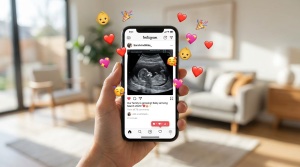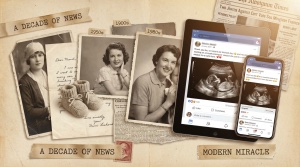
A fake ultrasound is a novelty image designed to look like a real medical sonogram, but it’s created for entertainment purposes rather than diagnostic ones. These images replicate the appearance of actual pregnancy ultrasounds—complete with the grainy black-and-white aesthetic, fetal imagery, and official-looking text—without representing a real pregnancy or medical scan.
If you’ve landed on this page, you’re probably curious about what these are, why people use them, and whether they’re something you might want. I’ve spent years in this space, and I’m going to break it all down for you—the what, the why, the history, and everything in between.
What Exactly is a Fake Ultrasound?
Let me be crystal clear: a fake ultrasound is a novelty product. It’s a printed or digital image that mimics the visual characteristics of a medical ultrasound, but it doesn’t come from an actual sonography machine scanning an actual pregnancy.
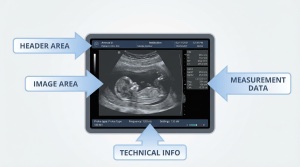
These images typically include:
- The characteristic grainy, black-and-white appearance of real ultrasounds
- A fetal silhouette or shape
- Patient information fields (usually customizable)
- Date stamps and measurement markers
- Hospital or clinic logos (often generic)
The quality and realism vary significantly depending on where you get them. Some look obviously fake at first glance, while others are remarkably convincing. In my experience, the difference comes down to the creator’s attention to medical accuracy and printing quality.
Types of Fake Ultrasounds
Not all fake ultrasounds are created equal. Here are the main categories you’ll encounter:
Standard 2D Ultrasounds
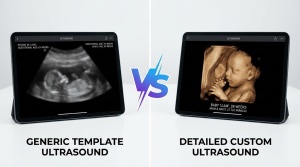
These replicate the classic ultrasound look—the one most people picture when they think of pregnancy scans. They show a side profile of a fetus in the typical grainy black-and-white style. These are the most common and widely available type.
3D/4D Style Ultrasounds
More advanced fake ultrasounds replicate the newer 3D imaging technology that shows detailed facial features. These are trickier to create convincingly because the source imagery needs to be much more detailed.
Early Pregnancy Ultrasounds
Some fake ultrasounds specifically replicate early-stage scans (6-12 weeks), showing the smaller embryonic shapes typical of first-trimester imaging. These have a distinct look that differs from later pregnancy scans.
Keepsake and Novelty Styles
These might include decorative elements, funny additions, or obvious fictional elements (like twins wearing sunglasses). They’re designed to be clearly humorous rather than realistic.
Why People Use Fake Ultrasounds
This is probably the question I get asked most often. The reasons are actually pretty diverse:
Pranks and Jokes
This is the big one. Fake ultrasounds are incredibly popular for April Fools’ Day pranks, surprising friends, or playful jokes. There’s something universally funny about watching someone’s face when they think you’re announcing a pregnancy—especially when you’re not.
I’ve seen people prank their parents, their partners, their coworkers, and even the internet at large. When done in good spirit, these pranks create memorable reactions and plenty of laughter.
Film and Television Production
Here’s one most people don’t think about: entertainment production. TV shows, movies, and theater productions need prop ultrasounds all the time. Using real patient images would be a privacy violation (and logistically complicated), so fake ultrasounds are the standard solution.
Next time you see a character in a TV drama holding up an ultrasound image, there’s a very good chance it’s a fake one from a prop supplier.
Educational Purposes
Medical schools, nursing programs, and patient education initiatives sometimes use fake ultrasounds for training purposes. They provide a way to discuss sonography without using actual patient data.
Creative Announcements
Some people use fake ultrasounds as placeholders while waiting for their real ones—maybe their first appointment isn’t for a few weeks, but they want to start planning their announcement. Others use them in reveal boxes or creative pregnancy announcements where the ultrasound is just one visual element among many.
Gag Gifts
Fake ultrasounds make popular gag gifts for bridal showers, birthday parties, or other celebrations. “Here’s your future!” gifts are perennial favorites.
Art and Photography
Artists and photographers sometimes incorporate fake ultrasounds into their work. Whether it’s a commentary on parenthood, a surrealist piece, or just a creative photoshoot, the ultrasound aesthetic has become culturally significant enough to appear in art.
The History and Evolution of Fake Ultrasounds
Fake ultrasounds have been around almost as long as ultrasound technology itself became commonplace in prenatal care. Here’s a quick timeline:
1980s-1990s: Early Days
As ultrasound imaging became standard in obstetric care through the 1980s and 1990s, the ultrasound image became a cultural symbol of pregnancy. Parents started keeping and sharing these images, and the ultrasound became iconic.
The first fake ultrasounds were mostly homemade—people would photocopy real ones, draw on them, or create crude imitations for jokes. Quality was generally poor, but the concept existed.
2000s: Digital Age Arrives
As graphic design software became accessible and the internet connected niche communities, fake ultrasounds became easier to create and distribute. Online pranksters and joke gift companies started offering them, though quality varied wildly.
This era also saw the first dedicated websites selling fake ultrasounds, though many were rudimentary.
2010s: Quality Improvements
The 2010s brought significant improvements in quality. Better design tools, higher resolution printing, and increased competition pushed creators to make more realistic products. The market also expanded beyond pure pranks to include prop houses and entertainment production.
Social media amplified the prank use case dramatically—fake ultrasound pranks became viral content, which drove more interest.
2020s: Mainstream and Specialized
Today, fake ultrasounds are a well-established novelty product. You can find them ranging from cheap printables to premium, highly customized options. The market has segmented into different quality tiers and use cases.
How Fake Ultrasounds Are Made
Understanding how these images are created helps explain why quality varies so much:
Digital Design Method
Most fake ultrasounds are created entirely in graphic design software. Skilled designers study real ultrasound imagery and recreate the visual elements—the grain, the shadows, the fetal shapes, the text formatting. The best designers have extensive reference libraries and understand medical imaging conventions.
Template Modification
Some creators start with basic ultrasound templates and modify them for different clients. This is faster but can result in similar-looking images across different orders.
AI and Automated Generation
More recently, some services use AI image generation to create unique ultrasound-style images. The results are mixed—AI can create novel images quickly, but the medical accuracy often suffers.
If you want to try making one yourself, check out my guide on how to make a fake ultrasound—though I’ll warn you, getting it right takes more skill than you might expect.
Real vs. Fake: Key Differences
How can you tell a fake ultrasound from a real one? Here are the main differences:
Medical Accuracy
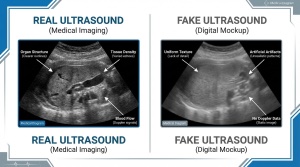
Real ultrasounds show anatomically accurate fetal development for the gestational age indicated. Fake ones sometimes get proportions wrong or show development inconsistent with the date.
Technical Details
Authentic ultrasounds include specific technical data—measurement calculations, machine settings, sonographer information. Fake ones often have generic or missing technical data.
Image Quality
Real ultrasounds have a specific quality of grain and shadow that comes from actual sound wave imaging. Replicating this digitally is possible but difficult.
Paper and Printing
Medical ultrasounds are printed on thermal paper with a specific texture and finish. Many fake ultrasounds are printed on regular photo paper or standard printer paper.
For a deeper dive into spotting the differences, check out my comprehensive guide on real vs. fake ultrasounds.
Legal and Ethical Considerations
Let’s address the serious stuff. Fake ultrasounds exist in a legal gray area that depends entirely on how they’re used.
Legal Uses
- Pranks among friends and family (no deception for gain)
- Entertainment production props
- Educational materials
- Art projects
- Gag gifts
Potentially Problematic Uses
- Deceiving someone for financial gain
- Manipulating a partner about pregnancy status
- Fraud or legal proceedings
- Any situation where deception causes material harm
Reputable sellers include disclaimers that their products are for entertainment purposes only. Using a fake ultrasound for fraud or harmful deception could potentially result in legal consequences depending on your jurisdiction and the specific circumstances.
My advice? Keep it fun, keep it harmless, and never use these for anything that could hurt someone.
Frequently Asked Questions
Are fake ultrasounds illegal?
Owning or selling fake ultrasounds is not illegal in most places. However, using them for fraud, to deceive courts, or for other harmful purposes could violate various laws. The product itself is legal; certain uses might not be.
How much do fake ultrasounds cost?
Prices range from free (low-quality printables) to $50+ for premium, customized options with realistic printing. Most fall in the $15-30 range. For recommendations on where to buy, see my guide to the best fake ultrasound websites.
Can doctors tell if an ultrasound is fake?
Medical professionals can usually spot fake ultrasounds fairly easily. They know what authentic imaging looks like and can spot inconsistencies in anatomy, technical data, and image quality that laypeople might miss.
How long does it take to get a fake ultrasound?
Digital versions can be delivered within hours. Physical prints typically ship within 1-3 business days, with delivery depending on your location and shipping method.
Can I customize a fake ultrasound?
Most services offer customization options including name, date, gestational age, and sometimes hospital/clinic information. The level of customization varies by provider.
Are there fake ultrasounds for twins or multiples?
Yes, many providers offer twin or multiple pregnancy versions. These can be particularly popular for pranks (imagine telling your parents they’re getting four grandchildren at once).
What’s the best fake ultrasound for pranking?
For pranks, you generally want something realistic enough to cause initial surprise but not so convincing that it causes genuine distress. Mid-range options from reputable providers usually hit this balance well.
Final Thoughts
Fake ultrasounds are a novelty product with legitimate entertainment uses. They’ve been around for decades and serve purposes ranging from harmless pranks to professional film production. The key is understanding what they are, what they’re for, and how to use them responsibly.
If you’re interested in getting a fake ultrasound, start by visiting our main fake ultrasound page where I break down everything you need to know about your options. And remember—keep it fun, keep it harmless, and enjoy the reactions.